
Materials Physics and Laser Physics Laboratory
The Yap Research Laboratory (Materials Physics and Laser Physics Laboratory) consists of four research rooms:
- The main laboratory (B031) houses all the major materials synthesis facilities as well as a nanoelectronic field emission characterization system.
- The PECVD room (B012/B013) is equipped with a plasma-enhanced chemical vapor deposition system.
- The spectroscopy laboratory (B034) features all the major characterization systems, including a micro-Raman spectrometer, a micro-FTIR spectrometer, and a micro-probe station, a solar simulator, a UV-VIS spectrometer, and so on.
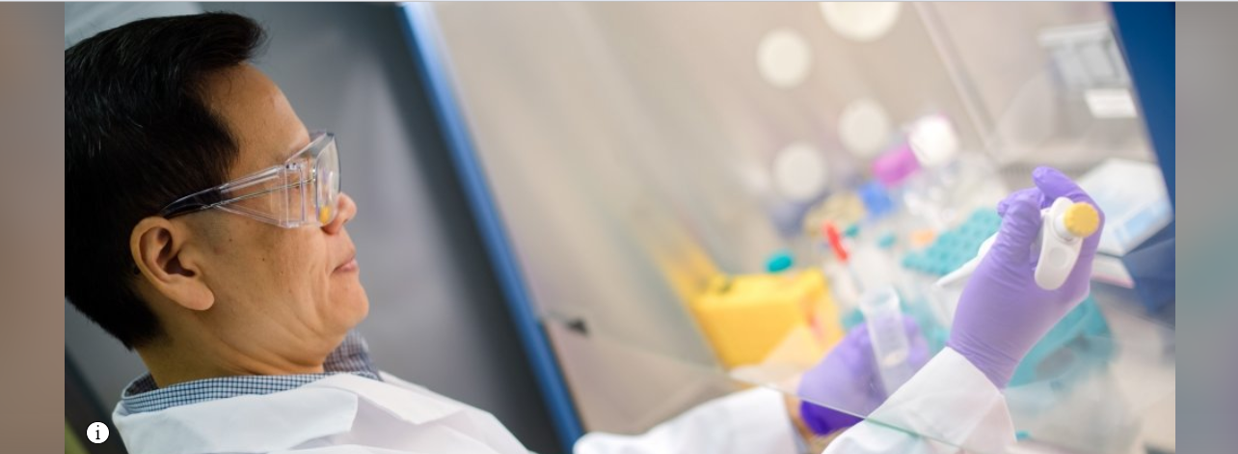
- The chemical and biological physics (ChemBioPhys) laboratory (B009) is specifically designed for chemical, biological, and electrochemical experiments. It has a controlled-atmosphere glove box, a computer-controlled electrochemical workstation, and a comprehensive molecular biology facility with a Class A2 Biological Safety Cabinet, a CO2 Incubator, a Refrigerated Centrifuge, a Freezer (-30 °C), a Phase-contrast Fluorescence Inverted Microscope with digital camera, a Sterilizer, a Cryogenic Storage system, and more.
Materials Synthesis
Dual-RF-plasma Chemical Vapor Deposition (CVD) System
Dual-RF-plasma Pulsed-Laser Deposition (PLD) System
Thermal Chemical Vapor Deposition (CVD) System
RF-magnetron Sputtering System
Plasma-enhanced Thermal Chemical Vapor Deposition (CVD) System
Materials Characterization
Nanoelectronic and Field Emission Characterization System
Spectroscopy Laboratory
Chemical and Biological Physics (ChemBioPhys) Laboratory
Acknowledgement
Facilities in the spectroscopy and electrochemistry laboratories are purchased with the support of Defense Advanced Research Agency through Army Research Laboratory with contract No: DAAD17-03-C-0115. The views contained in this document are those of the authors and should not be interpreted as presenting the official policies or position, either expressed or implied, of the U.S. Army Research Laboratory or the U.S. Government unless so designated by other authorized documents. Citation of manufacturer or trade names does not constitute an official endorsement or approval of the use thereof.
Top 
Materials Synthesis |
 |
Dual-RF-plasma Chemical Vapor Deposition
(CVD) System
Picture taken during the growth of vertically aligned carbon
nanotubes. |
|
 |
Dual-RF-plasma Pulsed-Laser Deposition (PLD) System
We use it to coat catalyst thin films for the growth of carbon
nanotubes. We discovered the BCN fibrous nanostructures, and
aligned carbon nanotubes by the same system too. |
|
 |
Thermal Chemical Vapor Deposition (CVD) System
We grow free-standing carbon nanotubes using this system. |
 |
Top 
|